
How rent, the mortgage and the buyout work in Probably Stolen, when to pay in full, and how to avoid a repossession on the final day.
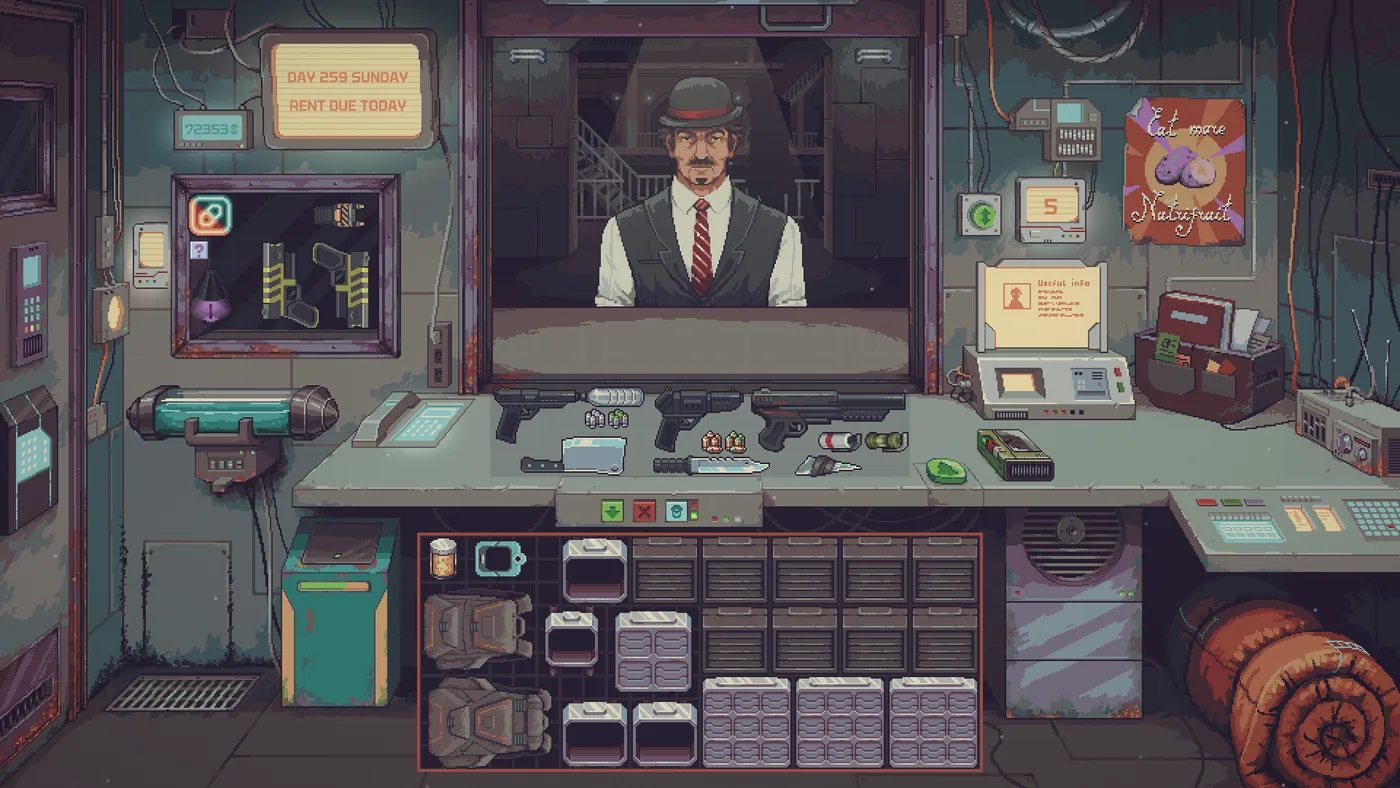
Probably Stolen How to Buy the Shop: Rent and Buyout
You win by buying the store. You can pay the full price on any rent day, or clear the mortgage over time. The safe route is to keep two rent cycles in cash, pay the mortgage whenever it does not threaten the reserve, and only attempt the full buyout when the payment leaves you enough to survive the next five days.
Rent is the main clock in Probably Stolen. It rises, it does not care about your inventory, and missing it can end the run. The buyout is the opposite: a deliberate decision to convert cash into ownership. Most players lose not because they cannot make money, but because they spend the buyout money on one more machine.
The three payment states
The ledger distinguishes three things that new players blur together.
- Rent. The recurring payment to the landlord. If you miss it and have no Rent Grace, the run can end in a rent default.
- Mortgage. A structured path to ownership. You pay it down over time. If you miss a mortgage payment and lack goods that qualify for repayment, the store can be repossessed.
- Buyout. A single payment of the full remaining price on a rent day. It ends the rent clock and gives you the deed.
The win screen distinguishes Store Bought (full buyout) from Mortgage Paid (the slower path). Both are wins. The difference is time and risk, not prestige.
Having the next rent in cash says nothing about the buyout. The buyout number is much larger and is shown in the ledger. If you spend down to the rent line, you are not close to buying the store; you are one bad event away from losing it.
The rent reserve rule
Keep two rent cycles in cash before you buy anything that is not stock or supplies. One cycle is the minimum to survive a bad day. Two cycles let you absorb an event, a fine or a slow sales week without selling inventory at a loss.
If the reserve is below one cycle:
- Stop all machine purchases.
- Sell dead stock, even at a thin margin.
- Take appraisal jobs.
- Do not start a wine batch or a long chemistry process that locks capital.
If the reserve is above two cycles:
- Put the excess into the mortgage, not into a new lane.
- Keep one cycle for events and one for the next rent increase.
- Only after the mortgage is current should you consider expansion.
When to pay the mortgage
Pay the mortgage when all three are true:
- The payment leaves at least one full rent cycle in cash.
- Your working lane can restock without borrowing.
- You have no open case that could produce a fine larger than the reserve.
Do not pay the mortgage when:
- A rent increase is due before your next production cycle.
- You are saving for a machine that removes a bottleneck and pays back before the next increase.
- You have contraband stock that could be seized; cash in the ledger is safer than goods on the shelf, but only if the payment does not leave you unable to restock.
The mortgage is a balance-sheet decision, not a moral one. Paying early reduces the amount of interest-like pressure the game puts on you; paying too early can leave you illiquid.
When to attempt the full buyout
The full buyout is a timing play. Do it when:
- You have the full amount plus a buffer for the next five days.
- Your stock is already sold or liquid, not tied up in wine or slow guns.
- No faction is at a threshold that could end the run during the payment window.
- You are not carrying a case that could be prosecuted before the deed transfers.
The buyout is not a "last day" action. If you wait until the final rent day and the number is short, you have no fallback. The safer pattern is to check the buyout number every rent day and buy as soon as the buffer is comfortable.
The win screen is not the end of the simulation. The Merchant still visits on Sundays after a buyout, and the station keeps running. A buffer protects you from the events that continue after the deed changes hands.
Repossession: the failure state nobody plans for
Repossession is not the same as rent default. It happens when you miss a mortgage payment and do not have goods that qualify for repayment. That means the store can be taken even if you have a shelf full of stock that the game does not accept as collateral.
The defence is simple and boring:
- Keep the mortgage current before you spend on expansion.
- Keep at least one category of qualifying goods in stock, not just cash.
- Do not convert all your assets into a single slow-moving item.
If you are close to a payment and short on cash, sell the fast-moving stock first. A store full of wine is not a store that can pay a mortgage.
The buyout math
Let B be the buyout price, R the next rent, C your cash, and S the value of stock you can sell within three days at a realistic price.
You are ready to buy when:
C ≥ B + R + 0.2 × R and S is not needed for the payment.
You are close when:
C + 0.7 × S ≥ B + R.
The 0.7 factor is a haircut for rushed sales. If you have to dump stock to make the payment, you are not ready; you are gambling on the buyer showing up.
Achievements tied to ownership
- Keys to the Kingdom unlocks when you own the deed.
- Prodigious requires the deed before day 50.
- From Nothing and From Nothing, the Hard Way require a win from the Rock Bottom start.
If you are chasing 100%, plan the deed run separately from the challenge run. The achievements guide lists the full 21 and the conditions.
A closing checklist
- Read the ledger: rent due, mortgage balance, buyout price.
- Count cash, not stock value.
- Subtract the next two rent cycles.
- Subtract any open fine or expected bribe.
- If the remainder covers the buyout, pay it.
- If not, pay the mortgage and repeat the lane for another cycle.
Do not buy a new machine in the same session as a buyout attempt. The machine is a distraction and a liquidity risk. The money guide explains how to build the reserve in the first place.
What happens after the buyout
The run is won, but the station does not stop. The Merchant still visits on Sundays, customers still trade, and the save can be continued. If you want to keep playing, treat the post-buyout period as a victory lap: finish achievements, test mods, or start a Rock Bottom save. If you want a clean ending, stop at the win screen and record the stats; the game shows your most profitable sale, days survived, total worth and perks.
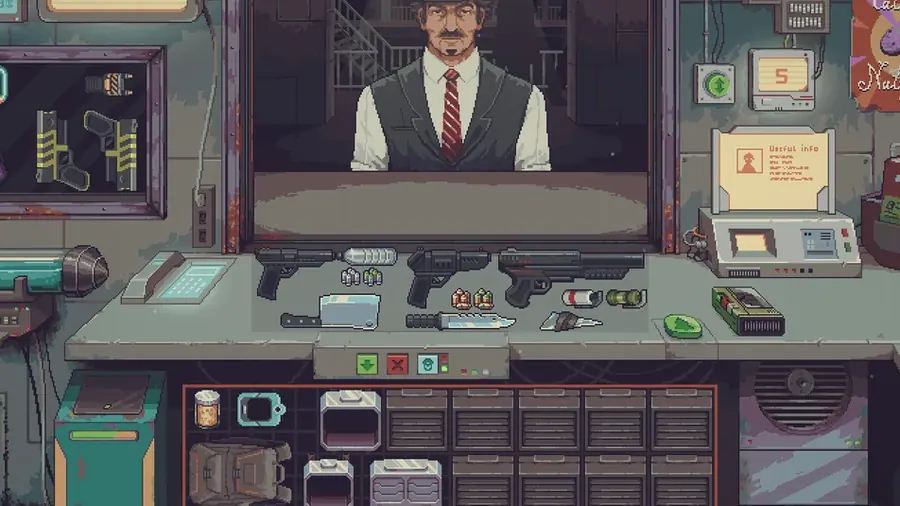
The vendor counter is where rent, stock and the buyout target compete for the same credits.
FAQ
When does rent increase?
Base rent rises on a schedule. Difficulty changes the rate: 2%, 5% or 10% per increase on Cozy, Normal and Thin Margins.
Can I renegotiate the rent?
There is no direct negotiation. Rent Grace and on-time payments are the levers you control.
What happens if I miss a rent payment?
Rent Default ends the run unless you have Rent Grace available.
Sources
- Steam store page and in-game ledger, checked 2 November 2026.
- Ending conditions cross-checked against the community ending list; see all endings.
- Build 1.0.0.6.
Official source: Steam store ↗ · Steam guides ↗ · Steam Workshop ↗, checked 2 November 2026.
More Probably Stolen Guides
The best Probably Stolen mods by play style, with Workshop IDs, subscription counts and compatibility notes for the 1.0.0.6 modding update.
All the starting perks that matter, ranked for money, crime, water and challenge runs, with exact point costs and the best three-point loadouts.
All nine Probably Stolen starts compared by credits, rent, gear and risk, with the best pick for a first run, a profit run and Rock Bottom.
How Brewing Expansion works: the 16 seeds, 67 wine recipes, growing and aging loop, automation, profit assumptions and compatibility with vanilla winemaking.
A profit-first Probably Stolen chemistry guide: purity math, acid and base workflow, contaminant control, and which chemicals are worth the risk.
Case value, investigation, raids, fines and bribes in Probably Stolen: how the crime system builds a case and how to stop it before 1,500 credits.
Which Probably Stolen mods actually change profit, which only save clicks, and how Brewing Expansion, WaterTower, Proficiency and CorpPresence affect a run.
The five Probably Stolen factions, what reputation unlocks, which choices raise or lower it, and the -100 thresholds that end runs.